DENTAL MAGAZINE | LEADING NO.1 DENTISTRY PUBLICATION
WE LEADWE CAREWE GROWTOGETHER
Join the world's first all-in-one digital platform exclusively for dental professionals. Connect, learn, and grow with peers around the globe.

50,000+
Global Readers
7+
Years Publishing
140+
Countries Reached
2,500+
Published Articles
Published Since 2017
DentalReach Dental Magazine is one of the most popular dental magazines with over 50,000 readers across the globe. It is the leading source of clinical news and information in Dentistry, providing high quality content covering topics such as Oral Health, Cosmetic Dentistry, Endodontics, Periodontology, Orthodontics, Pediatric Dentistry, Prosthodontics, Conservative Dentistry, Implantology, General Dentistry, Restorative Dentistry, Preventive Dentistry and much more.
Loading leaderboard...
What's In It For You?
DentalReach – Dental & Oral Health Magazine offers readers a chance to learn about dental health and receive personal advice from a trusted source. Each issue includes articles on topics such as preventing cavities, maintaining healthy teeth, improving oral hygiene, and much more.
Useful Tips & Professional Advice
Expert guidance from leading dental professionals
Recommended Products
Curated list of trusted dental products and equipment
Glossary of Dental Terms
Comprehensive terminology reference for professionals
Directory of Local Providers
Connect with dental professionals worldwide
Latest Research & Case Studies
Stay updated with cutting-edge dental research
Additional Resources
Comprehensive article library and expert consultations
Regular Updates & Newsletters
Never miss important dental news and updates
Professional Recognition
Build your reputation in the dental community
Dental News That Matters
DentalReach is your one-stop destination for recent updates from the world of Dentistry. Dental News has been regarded as the pioneer and most trustworthy dental magazine, providing accurate, timely, and relevant information to keep you ahead in your profession.
Latest Research
Cutting-edge studies and findings
Industry Trends
What's shaping the future
Technology Updates
New tools and innovations
Clinical Insights
Expert opinions and analysis
Discover Our Featured Sections
Dental News, Articles, Journal, Webinar and Podcast. We are committed to providing you with accurate, unbiased information about dental procedures. Our team of experts includes doctors, surgeons, researchers, writers, editors, and reviewers who review every article and video we publish. All our magazine articles are written exclusively by dental healthcare professionals.
Loading latest content...
Why DentalReach - Dental Magazine?
DentalReach enables Dentists to share their views, cases and anything and everything that is related to Dentistry. DentalReach is a gated community, that is strictly for Dental Professionals. All the trending articles on the website will be published on DentalReach Dental Magazine.
Exclusive Community
Gated community for dental professionals only
Share Clinical Cases
Share cases and experiences with peers
Trending Articles
Access to trending dental articles
Professional Networking
Connect with verified dental experts
Quality Content
Content from verified dental professionals
DentalReach Dental Magazine Goal
DentalReach connects dentists, to raise oral health consciousness. DentalReach Dental Magazine is here to help, inspire and motivate Dentists all over the world.
Why Publish With Us?
Authors will enjoy rigorous peer review of their research, prompt publication, multidisciplinary audience, high visibility for global exposure.
Rigorous Peer Review
Quality assurance through expert review
Prompt Publication
Fast turnaround times for your research
Global Exposure
High visibility worldwide
Multidisciplinary Audience
Reach diverse dental professionals
DentalReach Team
DentalReach dental magazine is led by a team of dedicated professionals committed to excellence in dental journalism.
Dr Rockson Samuel
Chief Editor
Leading the editorial vision and content strategy
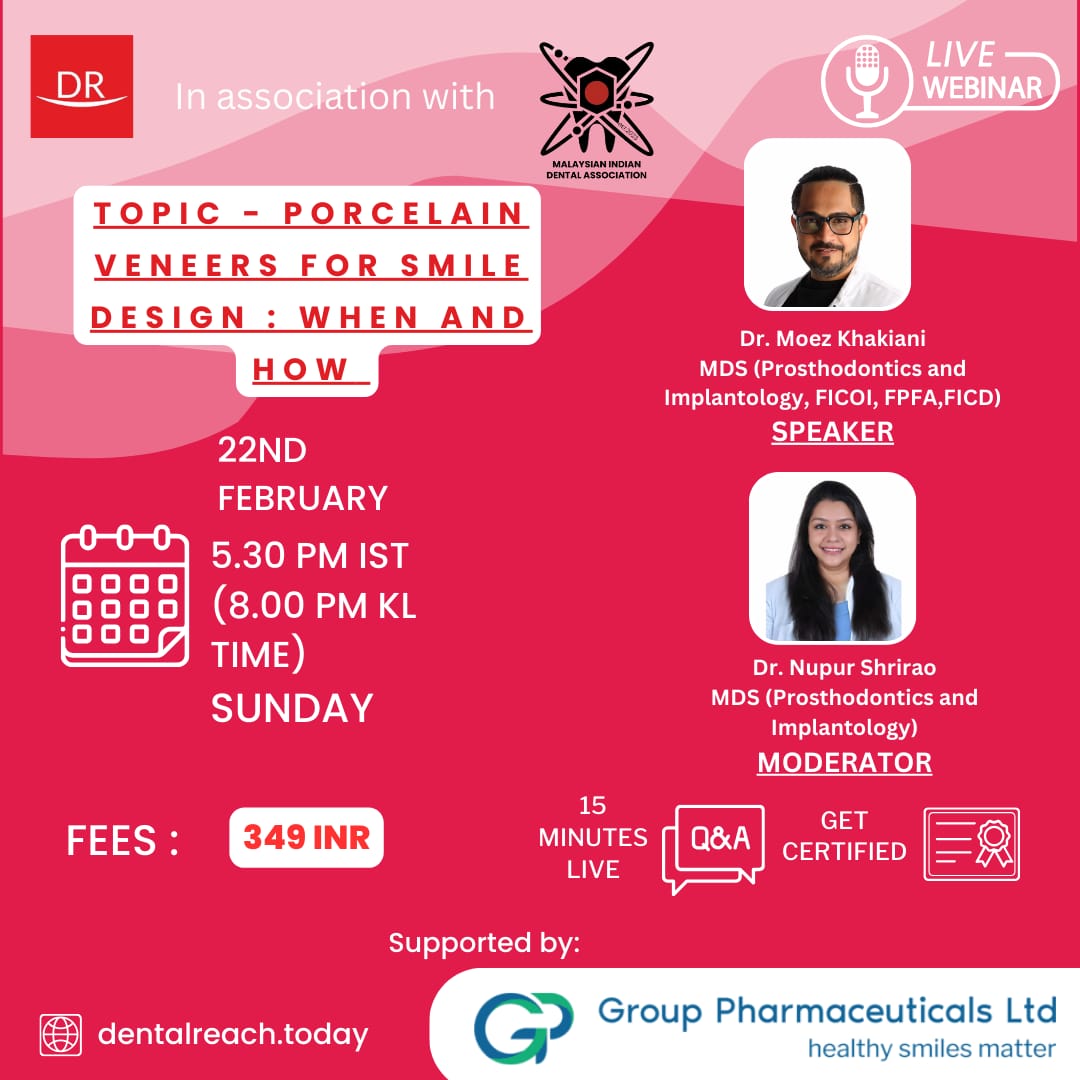
Dr Nupur Shrirao
Media and PR Head
Managing media relations and public communications
Dr Zainab Rangwala
Content Director
Overseeing content quality and editorial standards
IT Team
Technology Partners
Ensuring seamless digital experience and platform innovation
Advanced Features for Modern Dentistry
Our platform is built with cutting-edge technology to provide the best experience for dental professionals.
Global Accessibility
Access the platform from anywhere in the world with multi-language support.
Smart Content Discovery
AI-powered recommendations help you find relevant articles and discussions.
Professional Verification
Verified profiles ensure you're connecting with genuine dental professionals.
Platform Stats
Frequently Asked Questions
Find answers to common questions about DentalReach and our services.
Q:Where can I read dental articles?
A:You can read all our articles at the dental article section which is divided by categories for easy navigation. We have comprehensive coverage of Oral Health, Cosmetic Dentistry, Endodontics, Periodontology, Orthodontics, Pediatric Dentistry, and more.
Q:How do I write a dental journal?
A:Authors are urged to write as concisely as possible. The house style of Journal of Dentistry requires that articles should be arranged in the following order: Title, Abstract, Introduction, Materials and Methods, Results, Discussion, Conclusions, Acknowledgements, References, Tables, Figures.
Q:Is Dental Reach journal PubMed indexed?
A:The Magazine is indexed by Google Scholar and Google news. You will get an instant online boost by publishing your articles in Dental Magazine, reaching a global audience of dental professionals.
Q:What makes DentalReach a top dentist magazine?
A:DentalReach is a dental magazine that is primarily aimed at dentists. It is a source of valuable information and knowledge on the latest developments in the field of dentistry, designed to cater to the needs of dental professionals with insights and updates on the latest technologies, techniques, and practices.
Q:What topics does DentalReach cover?
A:DentalReach covers a wide range of topics such as dental procedures, oral health, dental products, and services, as well as business and practice management advice. We provide accurate, timely, and relevant information to help professionals stay ahead in their profession.
Q:How is DentalReach different from other dental magazines?
A:DentalReach is a leading dental magazine in India, highly regarded for its quality content and informative articles. It's known for its in-depth coverage of various aspects of dentistry, including the latest advancements in technology and techniques, with expert contributors and editorial staff ensuring quality.
Q:What types of articles are available on DentalReach?
A:DentalReach provides a wealth of articles on dentistry that cover a broad range of topics. The magazine's articles are written by leading experts in the field and provide readers with the latest insights and updates on dental procedures, technologies, and best practices.
Q:Does DentalReach provide access to dental journals?
A:DentalReach provides a comprehensive list of dental journals, making it easy for dental professionals to stay up-to-date on the latest research in the field. The list includes general dentistry, endodontics, periodontics, orthodontics, and other specialized areas.
Q:How can I stay updated with dental news?
A:DentalReach provides the latest dental news, ensuring that readers are always up-to-date on the latest developments in the field. We cover new technologies, research, and industry trends, helping professionals stay informed and ahead in their profession.
Q:How can I contribute to DentalReach?
A:DentalReach enables dentists to share their views, cases, and everything related to dentistry. It's a gated community strictly for dental professionals. All trending articles on the website are published in DentalReach Dental Magazine, providing authors with rigorous peer review, prompt publication, and global exposure.
Ready to Join the DentalReach Community?
Connect with thousands of dental professionals, access exclusive content, and stay at the forefront of dental innovation.