
KYOTO: A groundbreaking drug capable of regrowing teeth is set to begin human trials in September 2024, marking a significant advancement in dental medicine. Developed by researchers at Kitano Hospital in Japan, this innovative treatment aims to regenerate teeth by targeting a protein that inhibits tooth growth. Development and Mechanism: The drug, spearheaded by molecular biologist and dentist Katsu Takahashi, deactivates the uterine sensitization-associated gene-1 (USAG-1) protein, which suppresses tooth growth. By blocking USAG-1, the drug promotes bone morphogenetic protein (BMP) signaling, triggering the generation of new bone and teeth. Takahashi has dedicated his research to tooth regeneration since 2005, aiming to assist those suffering from tooth loss or congenital deficiencies. The drug has shown success in animal models, including mice and ferrets, without significant side effects. 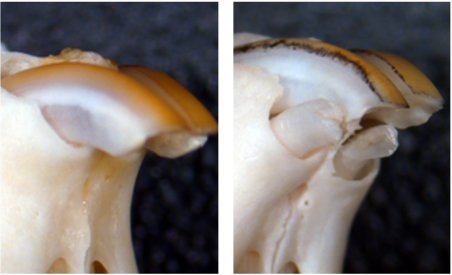 In mice deficient in USAG-1, an antagonist of BMP, the trace deciduous incisors survive and erupt as excess teeth (Kyoto University/Katsu Takahashi) Clinical Trial Phases: The clinical trials will be conducted at Kyoto University Hospital, beginning with 30 males aged 30-64 who are missing at least one molar. This phase will run from September 2024 to August 2025. Subsequent trials will focus on children aged 2-7 with congenital tooth deficiency, a condition affecting about 1% of the population. A third phase will target older adults missing one to five permanent teeth due to environmental factors.
 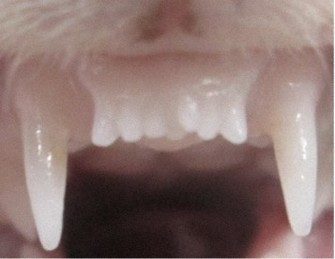 This photo provided by Kitano Hospital shows the front teeth of a ferret that was given the medicine. It had six teeth at first, but a seventh one, pictured at center, grew in. Target Demographics: The drug has the potential to benefit various groups, including:
In mice deficient in USAG-1, an antagonist of BMP, the trace deciduous incisors survive and erupt as excess teeth (Kyoto University/Katsu Takahashi) Clinical Trial Phases: The clinical trials will be conducted at Kyoto University Hospital, beginning with 30 males aged 30-64 who are missing at least one molar. This phase will run from September 2024 to August 2025. Subsequent trials will focus on children aged 2-7 with congenital tooth deficiency, a condition affecting about 1% of the population. A third phase will target older adults missing one to five permanent teeth due to environmental factors. This photo provided by Kitano Hospital shows the front teeth of a ferret that was given the medicine. It had six teeth at first, but a seventh one, pictured at center, grew in. Target Demographics: The drug has the potential to benefit various groups, including: - Individuals with congenital tooth deficiencies, such as oligodontia, affecting 0.1% of the population.
- People who have lost teeth due to cavities, injuries, or other environmental factors. It is estimated that around 5% of Americans are missing teeth, with a higher prevalence among older adults.
2026 clinical-development update
The original report described an anticipated first-in-human programme. As of May 2026, developer Toregem BioPharma reports that TRG035—a humanised anti-USAG-1 antibody—is progressing toward Phase II clinical trials in Japan. The initial development focus is congenital tooth agenesis, not routine replacement of teeth lost to caries, periodontal disease or trauma.
How the investigational therapy is intended to work
USAG-1 inhibits signalling involved in tooth development. Neutralising this protein is intended to permit development of dormant tooth buds. The biological rationale is supported by animal research, but human efficacy, tooth morphology, eruption control, occlusion, safety and durability require clinical evaluation.
What has not been established
- It is not an approved replacement for implants, bridges or dentures.
- Clinical benefit for common acquired tooth loss has not been demonstrated.
- A projected commercial date is not a guarantee of approval or availability.
- Eligibility, dosing, adverse effects and long-term surveillance depend on trial results and regulators.
Readers should distinguish company development announcements from peer-reviewed clinical outcomes and avoid presenting the treatment as currently available.
Frequently asked questions
Free for members
Keep reading — it's free
The rest of this article is open to DentalReach members. Create a free account, or sign in, and every article on the site opens in full.