
Cast Partial Denture with Precision Attachments: A Case Report
Cast partial denture (CPD) is a good prosthetic option for patients with missing teeth where implants are contraindicated. A regular acrylic removable partial denture (RPD) is actually an interim treatment and must ideally be considered as a temporary treatment plan. CPD on the other hand, can be used by the patient on a long term basis as a permanent treatment option or as an ideal stop gap arrangement till implants become a feasible option. Retention in a CPD can be achieved by extracoronal retainers i.e. clasps or intracoronal retainers i.e. precision attachments. The following case report demonstrates a CPD with precision attachments, used to replace an uncomfortable acrylic RPD and to improve the quality of life of the patient till he becomes medially fit to receive implants. A 69- year old male patient with missing teeth was referred by a general practitioner to the specialist’s clinic.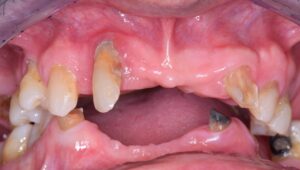 Patient was a maxillary partial denture user since 20 years; and wore a relatively newly fabricated mandibular partial denture since six months. Patient was satisfied with this prosthesis and did not wish to change it.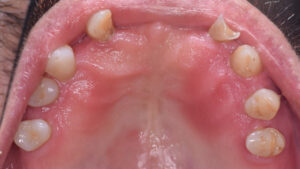
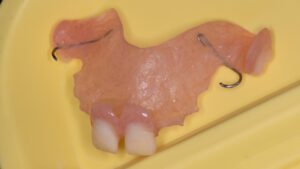 The patient’s chief complaint was the inability to unable to wear or eat with mandibular partial acrylic dentures. Patient also experienced difficulty in speech and frequent ulceration. On clinical examination, mobility was present in 33, 35, 37. Occlusion was light.
 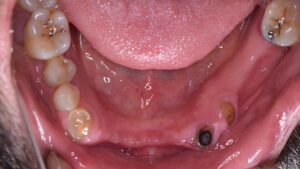 Medical history revealed uncontrolled diabetes. Patient had a severe fear of dentists and showed extreme anxiety towards surgeries. Implants were thus, contraindicated.
 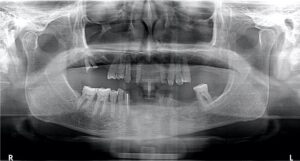 X-rays revealed a root canal treated 43, and poor bone support with 33,34,37. The treatment plan was decided on the basis of the clinical findings and medical history as mentioned above, and additionally on the basis of patient’s expectations and mental state, as described below: Patient expectations from the prosthesis:
- No mobility during speech
- Ability to chew food comfortably
- No undue pressure on the remaining “good” teeth
- Fearful of dentists
- Extremely fearful of losing rest of his teeth and
- Severely anxious regarding surgery
- Extractions of 33, 35, 37 (Mobile)
- Radicular attachment on 43 with silicon rings
- Composite build up on 44, 45 to raise the bite by 1 mm
- Cast partial framework lingual to the extraction sockets
- Cast partial Denture with embrasure clasps on 46, 47
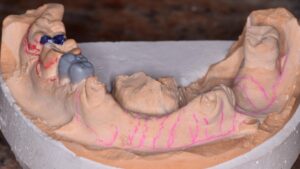
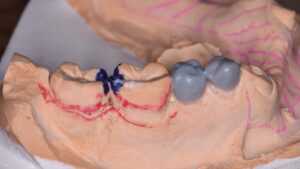
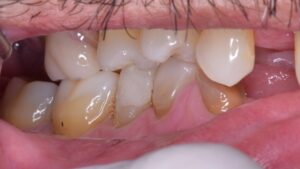 Mock up done intra-orally for verification. Embrasure clasps on 46, 47 required a rest seat preparation. Teeth in the lower right quadrant were isolated. Rest seat and cavity preparation was done in 46 -
 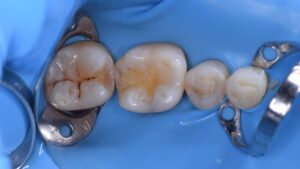 Composite build ups done on premolars and the molar restored -
 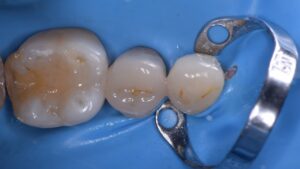 For the radicular attachment, a ball and socket type of precision attachment was planned for retention and silicon rings were planned to diffuse forces as the teeth were present unilaterally. Canine was prepared for the radicular attachment and retraction cord was placed for gingival displacement -
 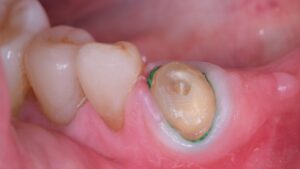 The rest seats were refined for embrasure clasps -
 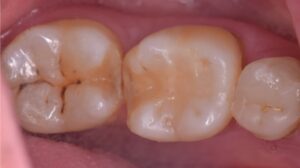 Impression was made and borders recorded -
 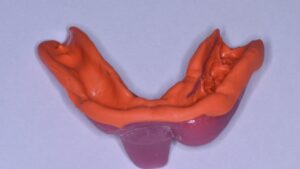 Area of the attachment was scooped out -
 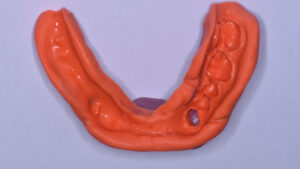 The final impression made with the post space -
 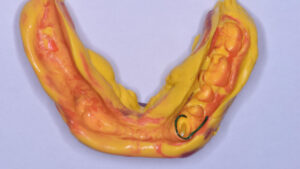 Detailing of the recorded post space -
 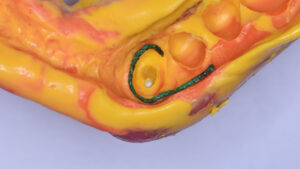 The cord was removed gently -
 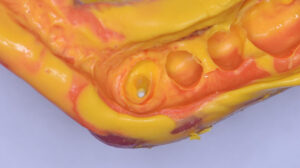 The final cast was obtained-
 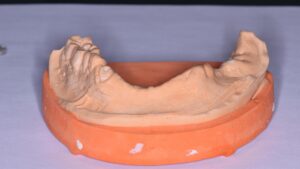 Metallic framework was fabricated.
 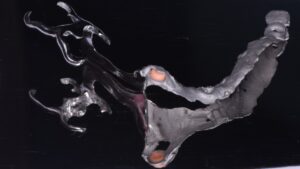 Framework with the attachment on the final cast
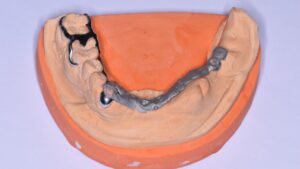 Framework trial was done intra-orally.
 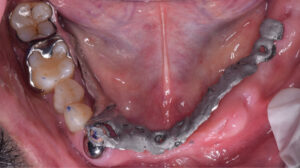 Framework trial was done with the maxillary partial denture in place to check occlusion -
 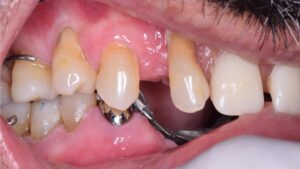 Jaw relation was recorded using a wax bite. The trial for teeth was done in two stages - anterior and then posterior. During the anterior trial, the posterior bite was re-evaluated and recorded using wax.
 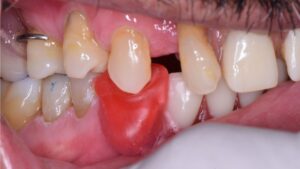 Anterior trial with wax bite
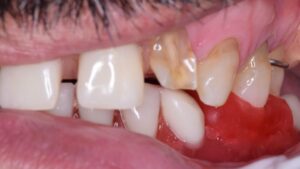 Anterior trial with wax bite After the trials, the prosthesis was fabricated.
 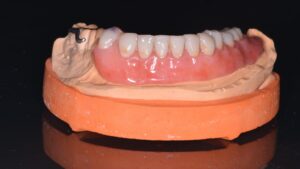 Final prosthesis - polished surface. Lab credits - Mr Senthil
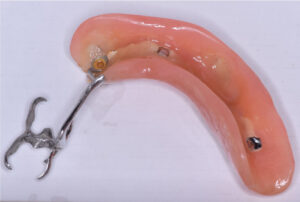 Final prosthesis - intaglio surface with silicon rings. Lab courtesy - Mr Senthil Attachment was cemented intra-orally.
 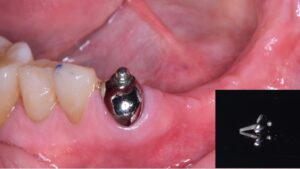 The prosthesis was delivered.
 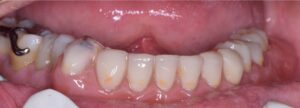 Prosthesis in place
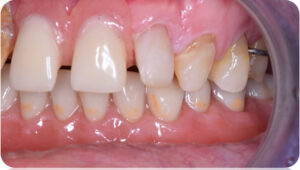 Left intercuspation.
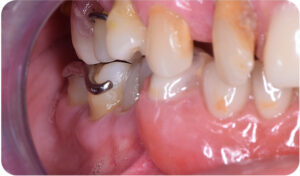 Right intercuspation.
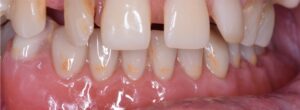 Frontal view Post-op instructions were given as for regular dentures and yearly recall visits were advised. The patient visited the clinic every year and is currently at a 3 year followup.
 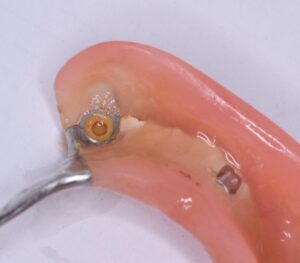 1 year Recall: At the 1 year recall, the patient complained that the denture had become loose. As it was discussed in the beginning, patient was aware and prepared for the change. The silicon ring was changed to ensure a good fit.
 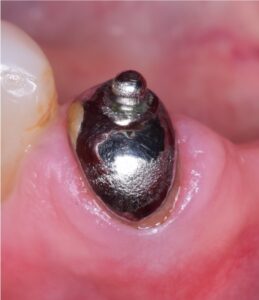 2 year Recall: At the 2 year recall, patient had no complaints and a clinical evaluation revealed good stability, retention of the denture; and normal wear and tear of the attachment. 3 year Recall: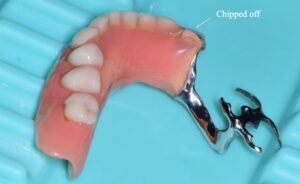
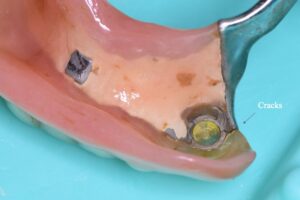 At the 3 year recall, slight chipping and cracks were seen which was repaired. The silicon ring was changed again. The wear and tear of the attachment was noted at all follow-ups to be normal as per use.
 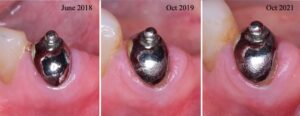 Hence, a cast partial denture with precision attachments effectively replaced an uncomfortable acrylic RPD, enhancing patient comfort and functionality. Yearly recall ensured the fit of the denture and wear and tear of the attachment.
Free for members
Keep reading — it's free
The rest of this article is open to DentalReach members. Create a free account, or sign in, and every article on the site opens in full.


