
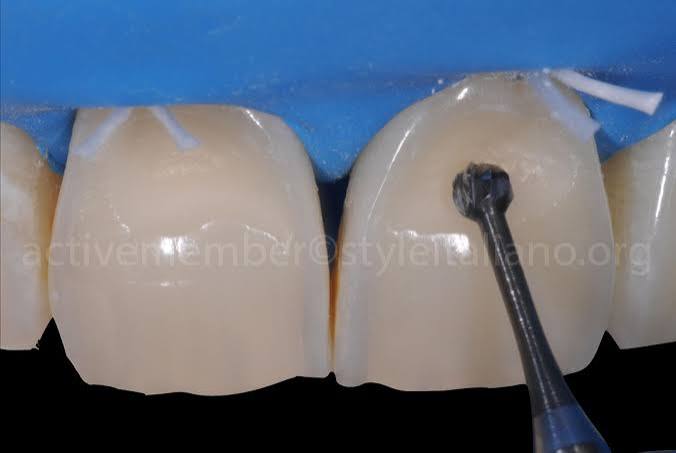
Three-year randomized clinical trial finds comparable performance in non-carious cervical restorations.
Restoring a non-carious cervical lesion can look deceptively simple. The cavity may be small, but achieving a restoration that blends naturally with the surrounding tooth can be surprisingly demanding—particularly when the cervical dentin is sclerotic, the enamel is thin and the substrate is discoloured.
Traditionally, clinicians have relied on multiple composite shades and incremental layering to reproduce the different optical characteristics of enamel and dentin.
But what if one shade could do the job?
Single-shade composites have been developed around the concept of the “chameleon effect”—the ability of a material to optically blend with the surrounding tooth rather than relying on multiple shades to reproduce its natural colour.
Does it continue to perform long-term in the similar manner?
A 36-month randomized clinical trial has now provided longer-term clinical data comparing a single-shade composite with a conventional multi-shade composite for the restoration of non-carious cervical lesions (NCCLs).
The study was designed as a single-centre, randomized, controlled, split-mouth, double-blind equivalence clinical trial. Sixty patients were included, with a mean age of more than 49 years.
Each participant received both restorative approaches, allowing the materials to be compared within the same patient. In total, 120 NCCL restorations were placed—60 using the single-shade composite Vittra Unique and 60 using the conventional multi-shade composite Vittra APS.
The restorations were followed at seven days and then at 6, 12, 18, 24 and 36 months. Clinical evaluations were performed independently by blinded examiners using the World Dental Federation (FDI) criteria, covering functional, biological and aesthetic aspects of restoration performance.
At the end of the 36-month observation period, both materials demonstrated stable and clinically acceptable performance. The most striking numerical difference reported in the available study data concerned retention. Seven restorations were lost because of retention failure during the three-year follow-up. Two belonged to the single-shade group, compared with five in the multi-shade group. The estimated cumulative 36-month retention rate was:
- 96.7% for the single-shade composite
- 91.7% for the multi-shade composite
The study's overall conclusion was that the single-shade composite demonstrated clinical performance comparable to the conventional multi-shade composite in NCCLs. Both systems maintained clinically acceptable performance throughout the three-year evaluation period.
The rationale behind single-shade composites is partly to reduce the complexity and operator dependence associated with selecting and layering multiple shades. The study authors describe the broader trend toward simplified restorative workflows as one of the reasons these materials have gained attention.
But a single-shade composite does not eliminate the need for proper adhesive technique, isolation, cavity preparation, finishing or polishing. And this study was performed specifically in NCCLs under a controlled clinical protocol.
Its findings should therefore not automatically be extrapolated to every anterior or posterior aesthetic restoration.
The study also took place at a single centre, with calibrated operators and blinded clinical evaluators. Those are strengths for controlling the trial conditions, but they also mean that real-world performance across different operators, materials and clinical situations may vary.