A laboratory study examining two universal adhesives found that adhesive volume, air application and material type influenced pulp-chamber temperature during light curing.
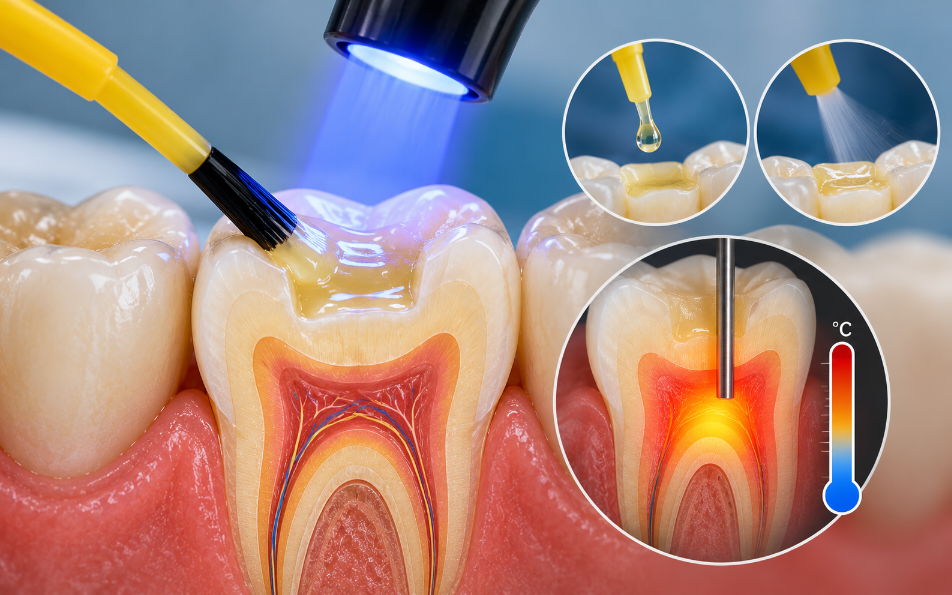
When applying a dental adhesive, most of our attention goes towards achieving reliable bonding. We actively apply the material, air-thin it to evaporate the solvent and then light-cure it according to the manufacturer's instructions. But there is another aspect of this routine that deserves attention: how much heat reaches the pulp during photopolymerisation?
A new study published in Frontiers in Dental Medicine investigated how adhesive quantity, air application and adhesive formulation influence pulp-chamber temperature during light curing. The findings suggest that these seemingly routine steps can make a measurable difference under laboratory conditions.
The researchers evaluated 120 extracted bovine incisors with standardised buccal cavity preparations. Two universal adhesive systems were tested: Single Bond Universal (3M) and Ambar Universal (FGM).
The experimental design considered three variables: adhesive type, adhesive volume and air application. Each adhesive was actively rubbed onto the prepared surface for 20 seconds. Where specified by the experimental protocol, air was applied for 10 seconds from a standardised distance of 10 cm.
Two adhesive quantities were compared: one-quarter of a drop and one-sixteenth of a drop. Following adhesive application, the specimens were light-cured using an LED curing unit.
The researchers measured the temperature change in the pulp chamber, calculating the difference between the peak temperature and the baseline temperature. Statistical analysis was used to assess the individual effects of adhesive type, volume and air application, as well as possible interactions between these factors.
One important detail is that the teeth were maintained under laboratory conditions without incubation or water-bath temperature control. The experiment therefore measured temperature changes in an extracted-tooth model rather than reproducing all the physiological conditions of a living tooth.
Free for members
Keep reading — it's free
The rest of this article is open to DentalReach members. Create a free account, or sign in, and every article on the site opens in full.