
Editorial for Volume 6, Issue 6 - Dental Software Special Issue As the dental profession shifts toward a digital-first future, software tools are no longer optional—they're foundational. From diagnosis to delivery, modern dental software is streamlining workflows, enhancing precision, and enabling new possibilities that were unthinkable a decade ago. In this special issue, we dive deep into how these tools are reshaping clinical outcomes and productivity across all specialties. This issue brings together cutting-edge reviews, expert columns, and real-world case studies to help you evaluate, compare, and implement digital solutions with confidence. Whether you’re a solo practitioner, run a multi-chair clinic, or manage a dental lab—this issue is for you. In this editorial, let us learn about the ecosystems of digital dentistry: their importance, integration, efficiency, and ROI.
 These softwares includes before-after visuals from digital-first ortho clinics.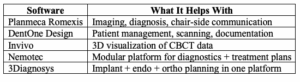
How Dental Software Is Reshaping Clinical Outcomes and Productivity
Dentistry has evolved from analog impressions and manual workflows to AI-driven diagnostics and cloud-based platforms. ✳️ Key insights into the impact of softwares :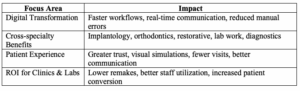
CAD/CAM for Dental Laboratories
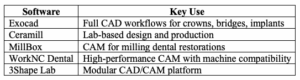
Digital labs are no longer just “techy”—they’re profitable, accurate, and scalable. Modern dental labs are reducing remakes, increasing speed, and staying competitive - all because of CAD/CAM, which has revolutionised dental labs. 🔧 Popular lab softwares with their key uses :Implant Planning & Surgery
Implant-focused software enhances surgical precision, improves outcomes, and lowers chairside time through features like CBCT integration, guided surgery planning, and simulation. It takes virtual planning on the clinical table through guided surgery protocols. 🧠 Popular implant softwares with their notable features: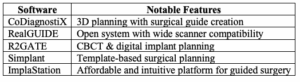
Smile Design & Orthodontics
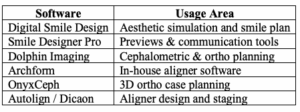
With aligners booming and patients demanding visual previews, digital tools are helping dentists design smiles with accuracy and flair. Orthodontic-specific software is transforming esthetic and orthodontic treatment, making end result visualisation easier. 😎 Tools That Make It Happen: These softwares includes before-after visuals from digital-first ortho clinics. Digital Tools for General Dental Offices
Everyday clinics practicing general dentistry can benefit from scheduling tools, AI-assisted diagnostics, and digital patient engagement—without needing an IT degree. Like smart phones, ‘smart clinics’ use software that powers modern dental practices. 🧰 Software in the Spotlight:Future of Diagnostics & AI in Dentistry
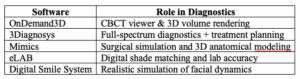
The future is alreadyhere—AI is assisting caries detection, CBCT scans are integrated with cloud sharing, and smart diagnostics are becoming standard in forward-thinking practices. AI, CBCT & Cloud are the next generation of diagnostic tools. 🧪 What’s Trending:💡 FAQs: Digital Dentistry Edition
❓ Is dental software difficult to learn? Most modern dental platforms have user-friendly interfaces, and many vendors offer certification courses and video tutorials. Start with core tools and scale up. ❓ What’s the return on investment (ROI) of investing in software? While initial costs vary (₹50K–₹3L+), clinics report savings through reduced remakes, faster appointments, and increased patient trust—ROI within 6–12 months is common. ❓ Which softwares are plug-and-play? Tools like CEREC, Planmeca, and 3Shape TRIOS offer end-to-end ecosystems that are tightly integrated. Others like Exocad + Medit + Hyperdent can be modular. ❓ Can software integrate with my existing machines? Yes—most modern tools support open file formats (STL, DICOM, PLY) and are compatible with 3D printers, milling machines, and CBCT scanners.More Inside This Issue
We’ve also included 6 actionable bonus features that dentists, practice owners, and labs will find invaluable:- ✅ Expert Column:Top 5 Software Tools Every Dentist Should Try in 2025
- ✅ Tech Feature:Compare CAM Software: Hyperdent vs. Millbox vs. SUM3D
- ✅ Case Study Corner:3 Real-World Examples of Software ROI
- ✅ Buyer’s Guide Table:25+ Dental Software Tools Compared
- ✅ Workflow Deep Dive:Mapping the Full Digital Dental Journey
- ✅ Special Bonus:Most Important Non Clinical Skill for Dentists: Dental Softwares & Digital Dentistry
🦷 Closing Note
This isn’t just another issue—it’s your blueprint for going fully digital. Whether you’re new to software or scaling up, the insights within will help you make confident, cost-effective, and clinical decisions. Read. Rethink. Rewire your practice.A safe digital workflow needs governance at every handoff
Software is not foundational merely because it is digital. Each tool should solve a defined problem, be validated for its intended use, integrate with the practice, protect patient data and preserve clinician oversight. Automation bias can cause users to accept a polished output without checking its clinical basis.
| Stage | Digital risk | Control |
|---|---|---|
| Data capture | Incomplete or inaccurate input | Quality check before interpretation |
| Analysis | Opaque or unvalidated recommendation | Clinician verification and intended-use review |
| Planning | Software output treated as diagnosis | Integrate examination and patient preferences |
| Manufacturing | File, material or calibration error | Documented quality assurance |
| Storage/share | Privacy breach or unauthorised access | Access control, encryption and audit logs |
Measure value with the dental software ROI framework. For Indian record exchange, read ABHA and digital dentistry. Patient autonomy is covered in the consent guide.
Frequently asked questions
Can AI make the final dental diagnosis?
AI may support assessment, but the responsible clinician must verify findings and integrate the complete patient context.
Does digitisation automatically reduce errors?
No. It can remove some errors and introduce new ones at capture, integration, automation and manufacturing stages.
What should be assessed before purchase?
Clinical need, validation, compatibility, data governance, training, support, total cost and measurable outcomes.