Dental Education & Research

Significance Of Preclinical Exercises In Dentistry For Undergraduate And Postgraduate Students

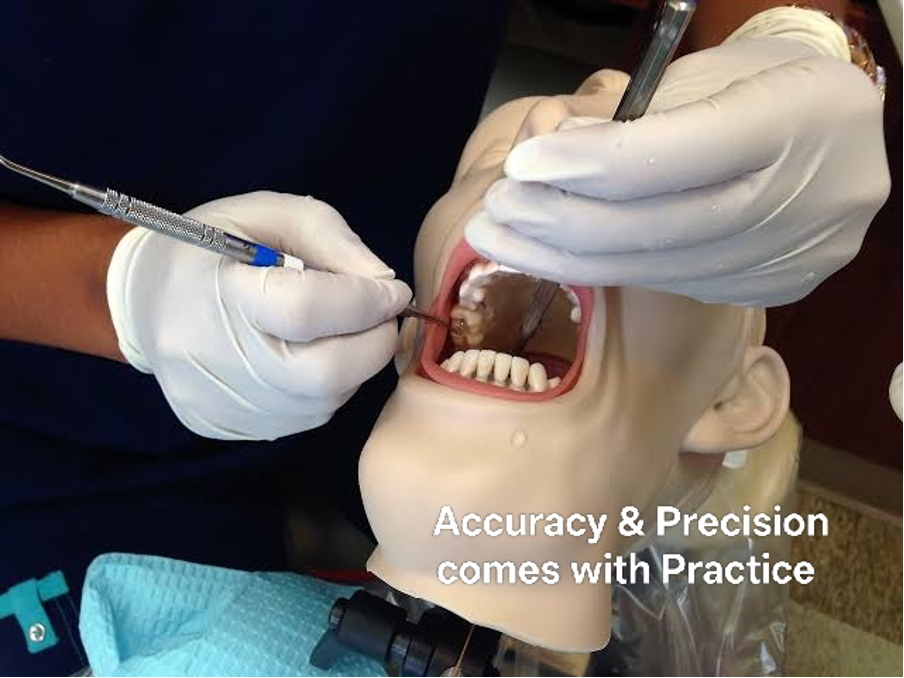
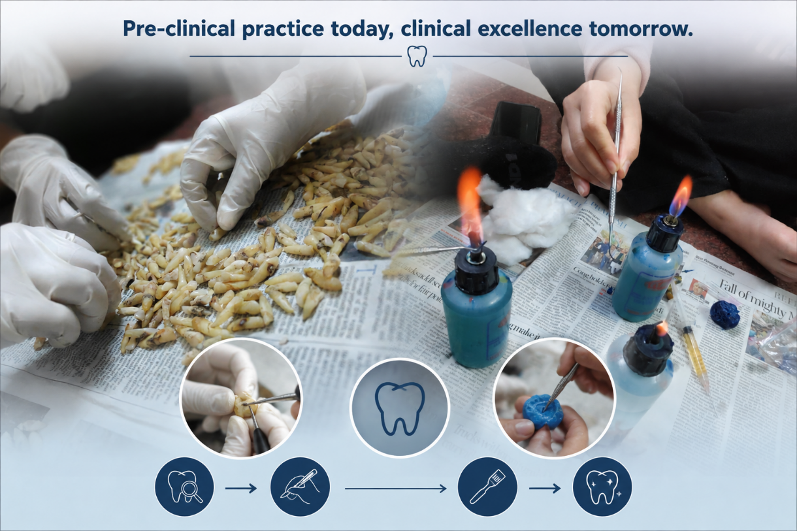
Every successful clinical procedure is built upon countless hours of preclinical practice. Dentistry is not merely a science but also an art that requires precision, repetition, and refinement before patient care begins

TD

Team DentalReach

5 min read103,485 views
  • patient safety
  • professional education
  • clinical confidence
  • dentistry
  • psychomotor skills
  • hand-eye coordination
  • preclinical training
  • operative dentistry
  • Dental Education & Research
  • Clinical & Academic Article
Contents

Abstract

Preclinical training forms the foundation of dental education and serves as a bridge between theoretical knowledge and clinical practice. Before treating patients, dental students must develop psychomotor skills, hand-eye coordination, procedural accuracy, ergonomics, and decision-making abilities in a simulated environment. Preclinical exercises enable students to practice repeatedly without compromising patient safety while gaining confidence and competence. The significance of preclinical training extends beyond undergraduate education and remains equally important during postgraduate specialization, where advanced procedures demand higher precision and clinical judgment. This article highlights the importance of preclinical exercises across various dental departments and discusses their role in developing competent and confident dental professionals.

INTRODUCTION

Dentistry is a profession that combines scientific knowledge, technical expertise, and clinical decision-making. Unlike many healthcare disciplines, dental procedures are performed within a confined operating field where millimeter-level precision can determine treatment success or failure.

Preclinical exercises provide a controlled learning environment where students can acquire fundamental skills before performing procedures on patients. The preclinical laboratory acts as a simulation center where mistakes become learning opportunities rather than clinical complications.

For undergraduate students, preclinical exercises introduce the fundamentals of operative procedures, tooth preparation, endodontics, prosthodontics, and surgical skills. For postgraduate students, they serve as platforms for mastering advanced techniques, testing new materials, and refining complex procedures before clinical implementation.

WHY ARE PRECLINICAL EXERCISES ESSENTIAL?

1. Development of Psychomotor Skills

Dental procedures require exceptional hand dexterity and fine motor control. Students learn:

  • Instrument handling

  • Finger rests

  • Mirror vision

  • Indirect vision

  • Precision cutting

  • Instrument stabilization

Repeated exercises improve muscle memory and procedural consistency.

2. Improvement in Hand-Eye Coordination

Most dental procedures are performed within a restricted field of vision.

Preclinical exercises train students to:

  • Work under magnification

  • Utilize indirect vision

  • Coordinate visual and tactile feedback

  • Perform precise movements in confined spaces

These abilities are difficult to acquire solely through theoretical learning.

3. Error Recognition and Correction

Mistakes are inevitable during learning.. Preclinical simulations allow students to identify:

  • Over-preparation

  • Under-preparation

  • Improper access cavities

  • Incorrect impression techniques

  • Inadequate restorations

Students can learn from these errors without causing harm to patients.

4. Increased Clinical Confidence

One of the greatest benefits of preclinical training is confidence building. Students who have repeatedly practiced procedures:

  • Experience less anxiety

  • Demonstrate better procedural flow

  • Communicate effectively with patients

  • Make informed clinical decisions

  • Patient Safety

Patient safety remains the foremost objective.

Preclinical exercises reduce:

  • Iatrogenic errors

  • Procedural complications

  • Instrument misuse

  • Treatment failures

By practicing beforehand, students enter clinics better prepared.

DEPARTMENT-WISE SIGNIFICANCE OF PRECLINICAL EXERCISES

A.Department of Conservative Dentistry and Endodontics

This department relies heavily on precision and tactile sensation.

Students learn:

  • Cavity preparation designs

  • Caries excavation techniques

  • Matrix placement

  • Rubber dam isolation

  • Access cavity preparation

  • Canal location and negotiation

For Postgraduates

Advanced simulation exercises include:

  • Microscopic endodontics

  • Calcified canals

  • Retreatments

  • Perforation repairs

  • Instrument retrieval

  • Management of complex anatomy

Preclinical practice improves procedural accuracy before patient treatment.

B. Department of Prosthodontics & Implantology

Prosthodontic success depends on precision preparation and restoration design.

Students learn:

  • Crown preparations

  • Bridge preparations

  • Impression procedures

  • Provisional restorations

  • Denture fabrication

  • Occlusal principles

For Postgraduates

Training focuses on:

  • Implant prosthodontics

  • Full mouth rehabilitation

  • Digital workflows

  • CAD-CAM restorations

  • Precision attachment prostheses

Repeated practice minimizes clinical and laboratory errors.

C.DEPARTMENT OF ORAL AND MAXILLOFACIAL SURGERY

Surgical procedures demand confidence and anatomical understanding.

Students gain experience in:

  • Instrument identification

  • Flap designs

  • Suturing techniques

  • Extraction principles

  • Surgical ergonomics

For Postgraduates

Advanced exercises involve:

  • Impacted third molar surgery

  • Osteotomy simulations

  • Trauma management

  • Implant placement

  • Guided surgery

Simulation reduces surgical complications and enhances confidence.

D. Department of Periodontology

Periodontal therapy requires delicate tissue handling.

Students practice:

  • Scaling techniques

  • Root planing

  • Instrument sharpening

  • Periodontal charting

For Postgraduates

Training includes:

  • Flap surgeries

  • Regenerative procedures

  • Microsurgical techniques

  • Mucogingival surgeries

  • Soft tissue grafting

Preclinical exercises improve tissue management and surgical precision.

E . Department of Orthodontics

Orthodontics involves biomechanical understanding and appliance fabrication.

Students learn:

  • Wire bending

  • Appliance construction

  • Model analysis

  • Cephalometric tracing

For Postgraduates

Advanced training includes:

  • Complex wire mechanics

  • Temporary anchorage devices

  • Digital orthodontics

  • Aligner planning

Repeated laboratory work improves treatment efficiency.

F. DEPARTMENT OF PEDIATRIC AND PREVENTIVE DENTISTRY

Children require specialized behavior management and clinical skills.

Students practice:

  • Cavity preparations in primary teeth

  • Stainless steel crowns

  • Preventive restorations

  • Pulp therapy procedures

For Postgraduates

Training includes:

  • Advanced pulp therapies

  • Esthetic pediatric restorations

  • Sedation simulations

  • Trauma management

Preclinical exercises enhance efficiency and child-friendly treatment delivery.

G. DEPARTMENT OF ORAL PATHOLOGY AND ORAL MEDICINE

Although less procedure-oriented, practical training remains important.

Students learn:

  • Histopathological interpretation

  • Slide preparation

  • Lesion identification

  • Diagnostic correlations

For Postgraduates

Training improves:

  • Histological diagnosis

  • Advanced microscopic interpretation

  • Research methodology

  • Diagnostic decision-making

These exercises strengthen diagnostic accuracy.

H. DEPARTMENT OF ORAL RADIOLOGY

Radiographic interpretation is fundamental for diagnosis.

Students practice:

  • Radiographic techniques

  • Image positioning

  • Radiation safety

  • Interpretation of normal anatomy

For Postgraduates

Advanced learning includes:

  • CBCT interpretation

  • Pathology diagnosis

  • Three-dimensional analysis

  • Advanced imaging software

Simulation improves diagnostic confidence.

I.DEPARTMENT OF PUBLIC HEALTH DENTISTRY

Preclinical exercises emphasize planning and communication.

Students develop:

  • Oral health survey techniques

  • Epidemiological assessments

  • Community treatment planning

  • Preventive dentistry skills

For Postgraduates

Training includes:

  • Research methodology

  • Program evaluation

  • Statistical analysis

  • Public health interventions

These skills are essential for evidence-based healthcare delivery.

IMPORTANCE OF PRECLINICAL TRAINING FOR POSTGRADUATE STUDENTS

Many believe preclinical exercises are only necessary for undergraduate students. However, postgraduate education demands even greater technical proficiency.

Benefits include:

  • Refinement of advanced techniques

  • Learning newer technologies

  • Reduced clinical complications

  • Better treatment outcomes

  • Improved research capabilities

  • Enhanced confidence with complex cases

Simulation-based education allows specialists to master challenging procedures before applying them clinically.

CHALLENGES IN PRECLINICAL EDUCATION

Despite its advantages, preclinical training faces several challenges:

  • Limited simulation of real patient behavior

  • Differences in tactile sensation between typodonts and natural teeth

  • Cost of advanced simulation equipment

  • Time constraints within curriculum

  • Variability in faculty evaluation

Modern simulation technologies and virtual reality platforms are helping overcome these limitations.

Conclusions

Preclinical exercises remain one of the most important components of dental education. They provide a safe environment for skill development, confidence building, error correction, and professional growth. Every department in dentistry benefits from structured preclinical training, whether in operative procedures, surgery, prosthodontics, orthodontics, periodontics, or diagnostic sciences. For both undergraduate and postgraduate students, preclinical exercises serve as the foundation upon which successful clinical practice is built. As technology continues to evolve, simulation-based education will become increasingly sophisticated, further improving the quality of dental training and patient care.

References

  1. [1]. Available at: source
  2. [2]. Available at: source