
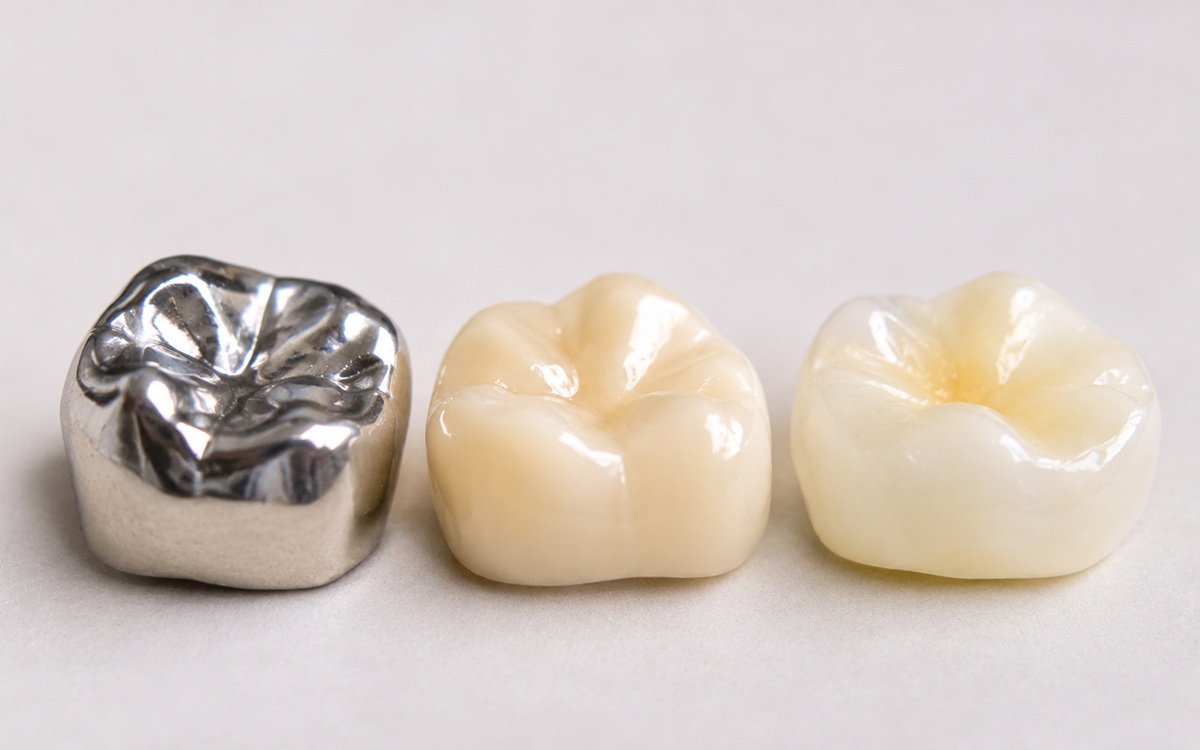
Restoring a badly decayed primary molar in a young child involves more than choosing a crown that fits. The restoration must withstand chewing forces, remain retentive, maintain gingival health and, increasingly, meet the aesthetic expectations of parents. At the same time, the dentist must consider how much tooth structure needs to be removed and whether the restoration will affect the opposing dentition.
Stainless-steel crowns (SSCs) have long been used for full-coverage restoration of primary molars, particularly when extensive caries or structural damage makes conventional restorations less predictable. However, the demand for tooth-coloured alternatives has brought zirconia and newer materials such as Bioflx into paediatric restorative dentistry.
A randomized controlled trial comparing these three preformed crown options evaluated their clinical performance alongside satisfaction reported by clinicians, children, and parents.
Three crown materials, three different considerations
The study included 72 primary molars from children aged 3–8 years. The teeth were randomly divided into three groups:
Group 1: Preformed stainless-steel crowns (3M™ ESPE™), 24 teeth.
Group 2: Preformed Bioflx crowns (Kids-e-dental LLP), 24 teeth.
Group 3: Preformed zirconia crowns (Kids-e-dental LLP), 24 teeth.
The crowns were evaluated immediately after placement and at 3, 6, 9 and 12 months. Assessment included clinical and clinician-related parameters, along with parental satisfaction.
At the 12-month evaluation, stainless-steel crowns recorded the highest retention rate at 91.6%. Zirconia crowns followed at 87.5%, while Bioflx crowns recorded a retention rate of 75%.
The difference in retention is clinically important, particularly in young children, where crown replacement or retreatment may involve additional appointments and behaviour-management challenges.
However, retention was not the only parameter in which the materials differed.
Zirconia crowns maintained favourable gingival health, stain resistance, and clinician-rated aesthetic scores in 100% of the evaluated cases at 12 months. These findings support the material's appeal when appearance is a major consideration.
There was, however, an important trade-off. Opposing-tooth wear was observed in 21% of cases in the zirconia group. This is a relevant consideration when selecting a crown, as the restoration must function harmoniously with the opposing dentition.
Free for members
Keep reading — it's free
The rest of this article is open to DentalReach members. Create a free account, or sign in, and every article on the site opens in full.