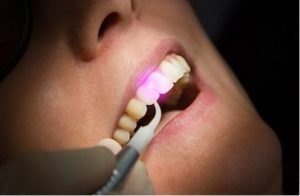
What if your next dental procedure could be faster, more comfortable, and involve less bleeding?
For many people, the sound of a dental drill is enough to create anxiety. Fortunately, advances in laser technology are changing the way dentists diagnose and treat oral diseases. Today, dental lasers offer a minimally invasive alternative for many procedures, improving patient comfort while helping dentists achieve precise clinical results. From treating gum disease to teeth whitening and oral surgery, lasers are becoming an important part of modern dentistry.
What Are Dental Lasers?
LASER stands for Light Amplification by Stimulated Emission of Radiation. A dental laser produces a focused beam of light that interacts with either soft tissues (such as gums) or hard tissues (such as teeth and bone).
Different wavelengths are used for different treatments. Commonly used dental lasers include:
Diode lasers– Soft tissue procedures and periodontal therapy
Er:YAG and Er,Cr:YSGG lasers– Treatment of teeth and bone
CO₂ lasers– Soft tissue surgery with excellent bleeding control
Nd:YAG lasers– Periodontal treatment and bacterial reduction
Where Are Lasers Used in Dentistry?
Dental lasers have a wide range of clinical applications.
Soft Tissue Procedures
Lasers are commonly used for:
Gingivectomy and gingivoplasty
Frenectomy
Crown lengthening
Removal of soft tissue lesions(biopsy)
Treatment of aphthous ulcers
These procedures usually involve less bleeding, minimal swelling, and faster healing.
Hard Tissue Procedures
Lasers can also be used for:
Caries removal
Cavity preparation
Enamel conditioning
Bone surgery
Management of dentinal hypersensitivity
In selected cases, laser treatment may reduce the need for local anesthesia.
Periodontal and Endodontic Applications
Lasers help disinfect periodontal pockets and root canals by reducing bacterial load. They can also support healing when used as an adjunct to conventional treatment rather than replacing standard procedures.
Aesthetic Dentistry
Lasers are increasingly used for:
Teeth whitening
Smile design
Gingival contouring
Free for members
Keep reading — it's free
The rest of this article is open to DentalReach members. Create a free account, or sign in, and every article on the site opens in full.