
Latest innovations in technology, science and health care are happening since the early days of mankind on this planet. Recently, the most popular innovation in periodontics is Laser. Light Amplification by Stimulated Emission of Radiation is the full form of Laser. Laser is a device, widely used in the field of periodontics both for non-surgical treatment and surgical treatment. Most of the patients have fear of scalpel, noise and vibration produced by the mechanical action of the air turbine or ultrasonic scalers. Laser is always helpful to treat such kind of patients. 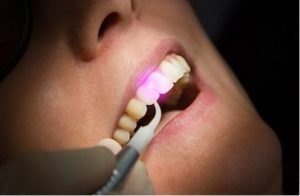 Latest innovations in technology, science and health care are happening since the early days of mankind on this planet. Recently, the most popular innovation in periodontics is Laser. Light Amplification by Stimulated Emission of Radiation is the full form of Laser. Laser is a device, widely used in the field of periodontics both for non-surgical treatment and surgical treatment. Most of the patients have fear of scalpel, noise and vibration produced by the mechanical action of the air turbine or ultrasonic scalers. Laser is always helpful to treat such kind of patients. Numerous varieties of lasers available in the dental market
Applications of lasers in periodontics
Latest innovations in technology, science and health care are happening since the early days of mankind on this planet. Recently, the most popular innovation in periodontics is Laser. Light Amplification by Stimulated Emission of Radiation is the full form of Laser. Laser is a device, widely used in the field of periodontics both for non-surgical treatment and surgical treatment. Most of the patients have fear of scalpel, noise and vibration produced by the mechanical action of the air turbine or ultrasonic scalers. Laser is always helpful to treat such kind of patients. Numerous varieties of lasers available in the dental market| Type of laser | Wavelength | Color | |
| Excimer lasers | Argon Fluoride (ArF) | 193 nm | Ultraviolet |
| Xenon Chloride (XeCl) | 308 nm | Ultraviolet | |
| Gas lasers | Argon | 488 nm | Blue |
| 514 nm | Blue-green | ||
| Helium Neon (HeNe) | 637 nm | Red | |
| Carbon Dioxide (CO2) | 10,600 nm | Infrared | |
| Diode lasers | Indium Gallium Arsenide Phosphorus (InGaAsP) | 655 nm | Red |
| Gallium Aluminum Arsenide (GaAlAs) | 670–830 nm | Red | |
| Gallium Arsenide (GaAs) | 840 nm | Red-infrared | |
| Indium Gallium Arsenide (InGaAs) | 980 nm | Infrared | |
| Solid state lasers | Frequency-doubled Alexandrite | 337 nm | Ultraviolet |
| Potassium Titanyl Phosphate (KTP) | 532 nm | Green | |
| Neodymium:YAG (Nd:YAG) | 1,064 nm | Infrared | |
| Holmium:YAG (Ho:YAG) | 2,100 nm | Infrared | |
| Erbium, chromium:YSGG (Er,Cr:YSGG) | 2,780 nm | Infrared | |
| Erbium:YSGG (Er:YSGG) | 2,790 nm | Infrared | |
| Erbium:YAG (Er:YAG) | 2,940 nm | Infrared |
- Gingivectomy
- Esthetic Crown Lengthening
- Frenectomy
- Depigmentation of gingiva
- Treatment of hypersensitivity.
- Subgingival calculus detection
- Root debridement, subgingival calculus removal, root conditioning, periodontal pockets have a complex anatomy with a complex environment which is favorable for growth of number of bacterial species. Conventional mechanical debridement cannot completely eliminate bacteria and their toxins from the complex periodontal pockets. Furcations and grooves hamper complete debridement and elimination of bacteria. Furthermore, conventional mechanical debridement using curettes is still a gold standard, and power scalers sometimes cause discomfort and stress in patients. Lasers have benefits like ablation, bactericidal and detoxification effects, as well as photo-bio modification. These can be used for periodontal pocket treatment. Lasers can be used for an adjunctive or alternative tool to conventional periodontal mechanical therapy. Er: YAG laser is most commonly used by dentists.
- Pocket lining epithelium removal for Laser-assisted new attachment procedure (LANAP). Elimination pocket lining by using Nd: YAG laser results in LANAP. It is associated with cementum-mediated new connective tissue attachment and apparent periodontal regeneration of diseased root surface in humans.
- Low-level laser therapy after periodontal surgeries to promote wound healing. Low laser irradiation along with conventional scaling and root planing can proliferate gingival fibroblast, periodontal cells and release growth factors. This results in early wound healing.
- Photodynamic Therapy (PDT): Routinely we prescribe antimicrobial drugs to beat microbial infection in pockets along with scaling and root planing. Continuous uses of antimicrobials for any infection in patients may result in resistance to drugs. Instead of these antimicrobial drugs, we can use photodynamic therapy in deep pockets. PDT involves three components including Light, photosensitizer, and oxygen. The photosensitizer is administered to the periodontal pocket, and upon irradiation with a specific wavelength laser, the photosensitizer undergoes transition from a low energy ground state to an excited singlet state. In the end, the photosensitizer decays back to its ground state with the emission of fluorescence or undergoes a transition to a higher energy triplet state. This singlet oxygen acts as a bactericidal. Therefore photodynamic therapy is important antimicrobial therapy adjunct to mechanical therapy.
- Previously soft tissue laser was only available but recently hard tissue lasers are also accessible with bone cutting efficiency. Hard tissue lasers for osteoplasty or ostectomy is costlier. Soft tissue lasers are effective in debridement of intrabony defects. Ex: Er: YAG lasers, Nd: YAG lasers.
Treatment of peri-implantitis
- Combination of above discussed methods is used. Classical curettes may result in roughening of titanium implant surface and it promotes bacterial adhesion. Laser irradiation not only eliminates bacteria but also removes granulation tissues. Therefore laser irradiation in peri-implantitis is really helpful and innovative application.
- Pain relief
- Inflammation reduction
- Accelerated tissue repair and cell growth
- Wound healing
- Reduced formation of scar tissue
- It is bactericidal
- Relatively bloodless surgical and post-surgical course.
- Ability to coagulate, vaporize, or cut tissue.
- Sterilization of wound tissue.
- Minimal swelling and scarring.
- No requirement of sutures as many patients fear if we tell about sutures.
- Little mechanical trauma.
- Reduced surgical time.
- Decreased post-surgical pain.
- High patient acceptance.
- Caution before and during irradiation
- Use glasses for eye protection for patient, operator as well as assistants.
- Inadvertent irradiation (action in noncontact mode).
- Protect patient’s eyes, throat, and oral tissues outside the target site.
- It reflects from shiny metal surfaces, therefore, it is important to understand laser physics before using it.
- High-speed evacuation requires to capture the laser plumes.
- Direct ablation may cause excessive tissue destruction and thermal side-effects
- Problems of laser systems
- Ishikawa I, Aoki A, Takasaki A, Mizutani K, Sasaki K & Izumi Y. Application of lasers in periodontics: true innovation or myth? Periodontology 2000, Vol. 50, 2009, 90–126.
- Aoki A, Sasaki K, Watanabe H & Ishikawa. Lasers in nonsurgical periodontal therapy. Periodontology 2000, Vol. 36, 2004, 59–97.
- Rakhewar P S, Patil HP, Thorat M. Diode laser treatment of an oral squamous papilloma of soft palate. J Dent Lasers 2015; 9:114-7.
Laser procedures remain adjuncts; treatment planning should begin with evidence-based periodontitis classification and conventional disease control.
Explore more with DentalReach
Read the DentalReach dental magazine for professional perspectives, browse clinical dental articles for practical learning, and follow dental news for updates across the profession. You can also read our dental magazine editions.
Continue learning through dental events and conferences, listen to dental podcasts featuring professional conversations, and exchange questions and experiences in our dental forums.
For your next career step, explore dental jobs and opportunities across dental practices and organizations.