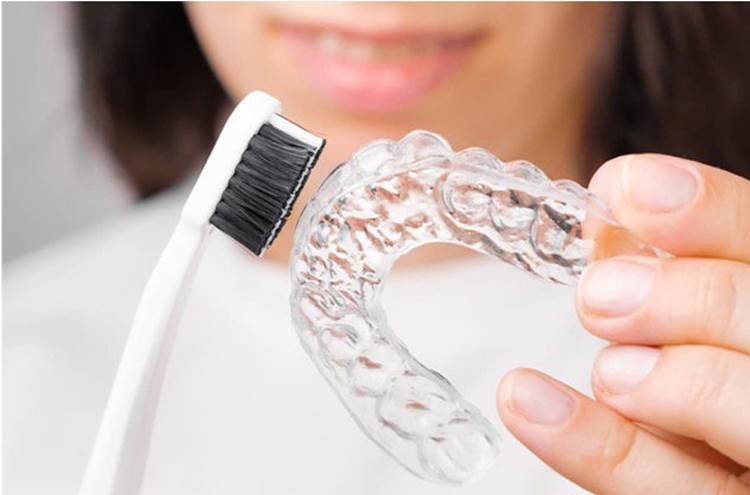
Orthodontic retention maintains corrected tooth positions after braces or aligners. Almost every patient requires a planned retention phase. Retainer type, wear and review are individualised according to the original malocclusion, periodontal support, growth, oral hygiene, patient adherence and relapse risk.
Contents
Why is retention required?
Teeth can move after active orthodontic treatment because periodontal tissues reorganise, soft-tissue and occlusal forces persist, growth continues and natural age-related changes affect alignment. Retention reduces relapse but cannot guarantee permanent immobility.
Fixed and removable retainers
Fixed bonded retainers provide continuous retention without daily insertion, but require careful hygiene and monitoring for bond failure or unwanted movement. Removable vacuum-formed or Hawley-type retainers simplify inspection and cleaning but depend on wear and replacement when damaged. Some patients benefit from combined strategies.
Orthodontic retainer comparison
| Retainer | Advantages | Limitations | Monitoring |
|---|---|---|---|
| Vacuum-formed | Aesthetic, full-arch coverage | Wear, fracture, heat distortion, adherence | Fit, cracks and occlusal effects |
| Hawley-type | Durable and adjustable | Visible wire and speech adaptation | Fit, acrylic and wire integrity |
| Fixed bonded | Continuous anterior retention | Plaque retention, debonding, wire distortion | Bond integrity, hygiene and tooth movement |
| Combined | Redundant retention for selected cases | Greater maintenance burden | Both appliances require review |
Long-term review
- Document the retainer type, wear instructions and expected duration during consent.
- Check fit, bond integrity, hygiene, periodontal health and unwanted movement.
- Replace or repair retainers promptly after failure.
- Clarify responsibilities among orthodontist, general dentist and patient.
- Reassess if relapse occurs rather than forcing an ill-fitting retainer.
Comparative evidence does not identify one strategy as best for every patient. Selection should therefore integrate evidence, clinical factors and patient preference.
Free for members
Keep reading — it's free
The rest of this article is open to DentalReach members. Create a free account, or sign in, and every article on the site opens in full.