Dentistry is changing faster than ever.
Artificial intelligence is beginning to influence diagnosis and treatment planning. Digital workflows are becoming routine rather than revolutionary. Regenerative therapies are moving from research laboratories into clinical conversations. And around the world, dentists are being asked to do more than simply restore teeth—they are being challenged to rethink how oral health fits into overall healthcare.
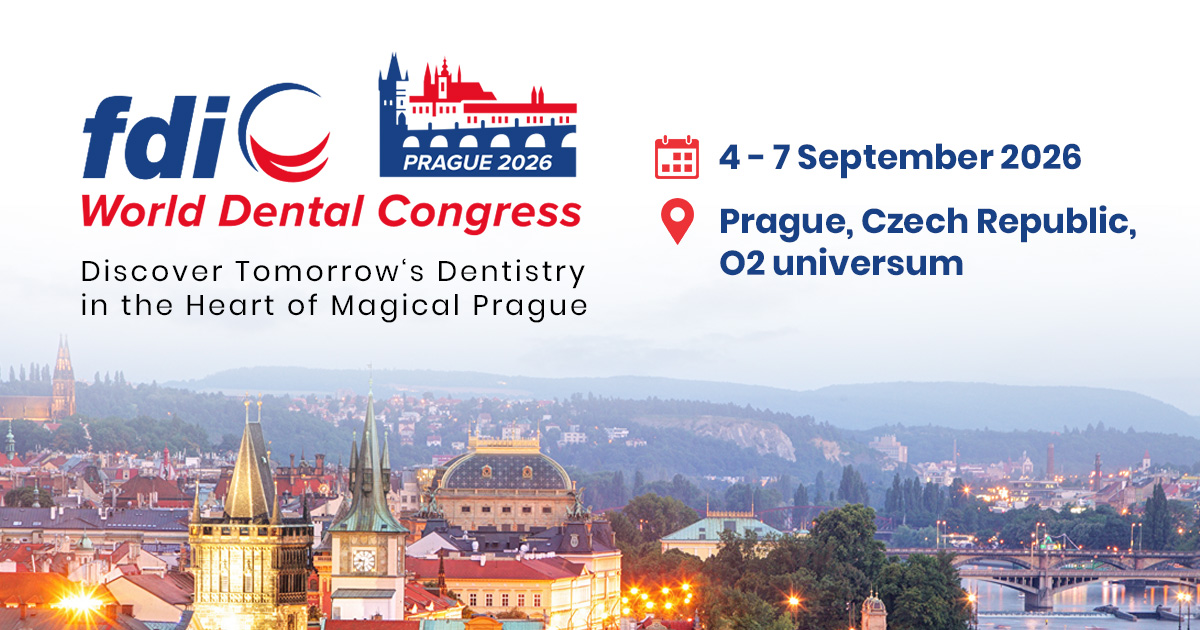
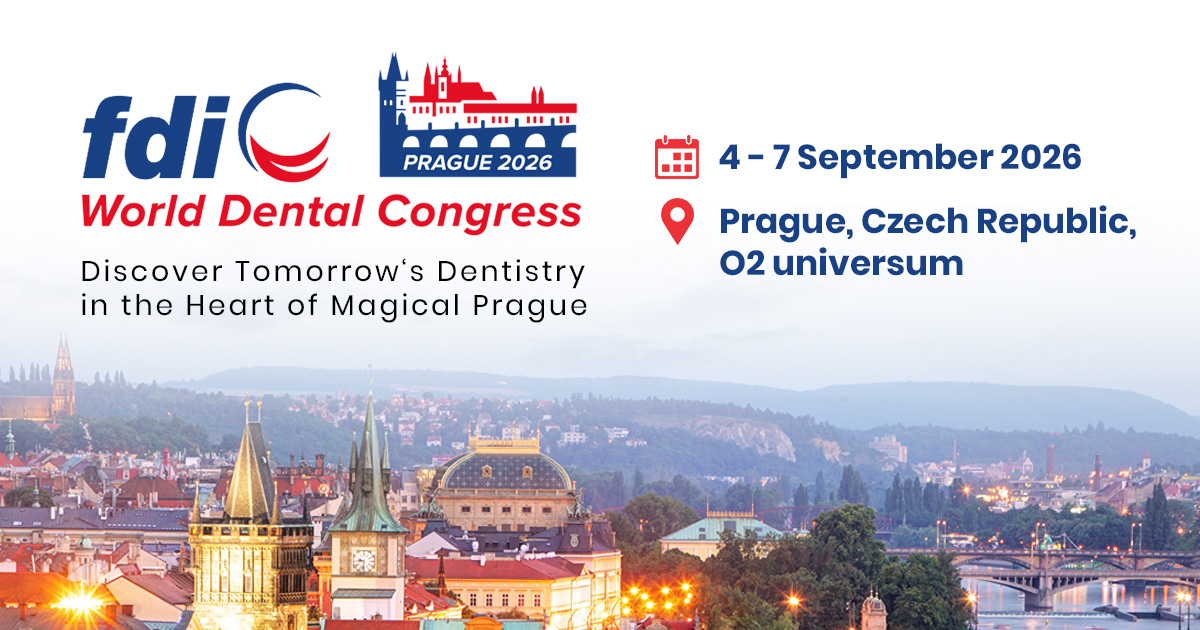
Against this backdrop, the global dental community will gather in Prague, Czech Republic, from 4–7 September 2026 for the FDI World Dental Congress 2026 (WDC26). More than just a scientific meeting, the Congress promises to be a platform where ideas are exchanged, innovations are explored, and the future direction of dentistry is discussed.
As FDI President Asst. Prof. Dr Nikolai Sharkov notes, the World Dental Congress is a place where the profession comes together to learn from one another, strengthen international connections, and advance a shared commitment to improving oral health worldwide.
In a profession like dentistry, undergoing such rapid transformation, that mission has never been more relevant.
What Makes WDC26 Different?
Every dental congress offers lectures, and networking opportunities. What makes the FDI World Dental Congress unique is its global perspective.
The event brings together clinicians, researchers, educators, industry leaders, and students from across the world. Different healthcare systems, different clinical experiences, and different approaches to patient care all converge under one roof.
This diversity creates an environment where conversations extend beyond individual specialties. Discussions often focus not only on how dentistry is practiced today, but how it should evolve tomorrow.
From advances in clinical care to broader questions surrounding education, technology, accessibility, and public health, WDC26 aims to reflect the full scope of contemporary dentistry.
Will AI Be the Biggest Conversation in Prague?
A few years ago, artificial intelligence was largely a topic reserved for technology conferences and academic discussions.
Today, it is rapidly becoming part of everyday dentistry.
From diagnostics and treatment planning to digital workflows and patient communication, AI is beginning to influence how clinicians work and how patients experience care. It is therefore no surprise that artificial intelligence and digital dentistry are expected to be among the most talked-about themes at WDC26.
According to Czech Dental Chamber President Assoc. Prof. Roman Šmucler, the Congress will feature a groundbreaking scientific programme with a strong focus on AI and digital dentistry—areas increasingly shaping the future of the profession.
Importantly, these discussions will go beyond technology itself. Delegates can expect conversations around responsible implementation, ethics, education, regulation, and how clinicians can successfully integrate new technologies into daily practice without losing sight of the human element of care.
For many attendees, these sessions may offer a glimpse into what dentistry could look like over the next decade.
A Scientific Programme Built Around Real-World Practice
The scientific programme is expected to bring together internationally recognised experts from across the dental spectrum.
Topics will span implantology, prosthodontics, endodontics, periodontology, paediatric dentistry, oral medicine, radiology, oral surgery, dental education, public health, biomaterials, regenerative therapies, and digital innovation.
What makes this particularly valuable is the multidisciplinary nature of the programme.
Modern dentistry rarely exists within the boundaries of a single specialty. Complex cases increasingly require collaboration across disciplines, and WDC26 reflects this reality by creating opportunities for delegates to explore new perspectives beyond their primary area of practice.
Free for members
Keep reading — it's free
The rest of this article is open to DentalReach members. Create a free account, or sign in, and every article on the site opens in full.