An exploratory randomized study finds lower plaque scores with two dextranase-containing formulations, with the formulation combining higher dextranase levels and IPMP showing the greatest reduction.
Plaque control remains one of the most fundamental goals of daily oral hygiene, yet the effectiveness of brushing depends not only on technique and frequency but also on the formulation of the toothpaste used. As research continues to explore ways of disrupting plaque accumulation beyond mechanical cleaning, enzymes that target components of the plaque matrix have attracted interest.
A recent exploratory randomized clinical study investigated whether toothpastes containing dextranase, with or without isopropyl methylphenol (IPMP), could improve plaque control compared with a toothpaste without these active ingredients. Over an eight-week period, both test formulations were associated with lower plaque index scores than the control formulation, with the combination of higher dextranase levels and IPMP showing the greatest reduction.
Targeting plaque matrix: the rationale behind dextranase
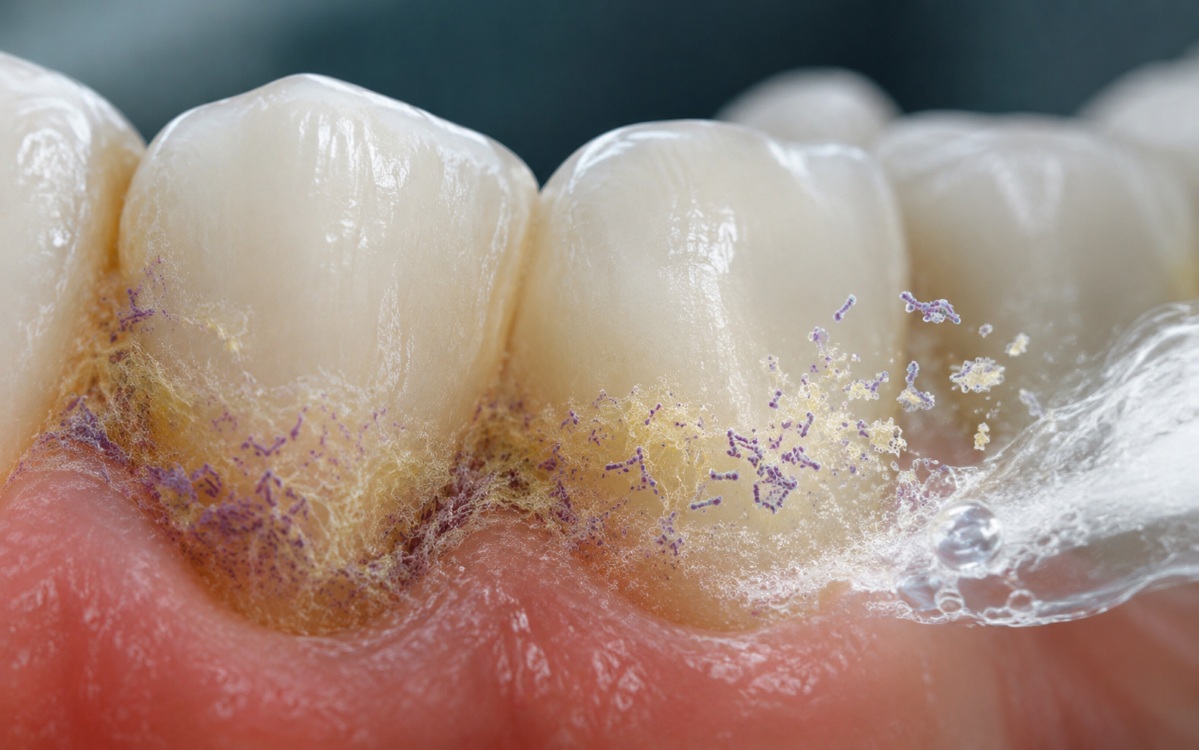
Dental plaque is a structured microbial biofilm, and its accumulation is influenced by the extracellular matrix that helps bacteria adhere to tooth surfaces. Dextranase is an enzyme that breaks down dextran, a polysaccharide component associated with plaque matrix formation. By targeting this component, dextranase-containing formulations may help interfere with plaque accumulation.
The study examined two test toothpaste formulations containing dextranase, compared with a control toothpaste that did not contain the studied active reagents. One test formulation also incorporated IPMP, an antimicrobial ingredient, alongside a higher dextranase level.
Rather than assessing the formulations only at a single endpoint, researchers followed plaque scores over eight weeks, allowing them to evaluate whether differences between the groups persisted over time.
A randomized clinical evaluation over eight weeks
The study enrolled 210 participants, of whom 186 completed the trial. Participants were randomly assigned using a computer-generated randomization list, with stratification based on baseline plaque index, age and gender. The study was double-blinded and exploratory in design.
Plaque accumulation was assessed using the Turesky modification of the Quigley–Hein plaque index. Measurements were taken at baseline and at weeks 2, 4 and 8. The primary outcome was the change in mean plaque index from baseline, with longitudinal assessments used to evaluate treatment effects.
The results showed progressively larger differences between the control and test formulations as the study continued.
Free for members
Keep reading — it's free
The rest of this article is open to DentalReach members. Create a free account, or sign in, and every article on the site opens in full.