Introduction
Root canal treatment is one of the most effective procedures in modern dentistry for saving a damaged or infected tooth. Despite its high success rate, many patients delay treatment due to fear or lack of awareness. Recognizing early warning signs is essential to prevent the progression of infection and avoid tooth loss.
Understanding the Need for Root Canal Treatment
The inner portion of a tooth, known as the pulp, contains nerves and blood vessels. When bacteria invade this area due to decay, cracks, or trauma, it can lead to inflammation or infection. If untreated, the condition may progress to severe pain, abscess formation, and damage to surrounding tissues.
Early Warning Signs to Watch For
1. Persistent Tooth Pain
Continuous or spontaneous pain is one of the most common signs of pulpal damage. The discomfort may radiate to the jaw or surrounding teeth and often worsens over time.
2. Prolonged Sensitivity to Hot or Cold
Sensitivity that lingers after exposure to hot or cold foods or drinks is a strong indicator of nerve involvement.
3. Pain When Chewing or Biting
Discomfort during chewing may suggest inflammation around the tooth root or infection in the supporting tissues.
4. Tooth Discoloration
A darkened or grayish tooth may indicate internal damage or pulp necrosis.
5. Swelling and Gum Tenderness
Swelling, tenderness, or the presence of a small bump on the gums (abscess) often signals infection.
6. Bad Taste or Persistent Odor
An ongoing bad taste or odor in the mouth can result from infection and pus drainage.
Diagnosis and Clinical Evaluation
Dentists use a combination of clinical examination, pulp vitality tests, and radiographic imaging to confirm the diagnosis. Early detection allows for less complex treatment and better outcomes.
Why Early Treatment Matters
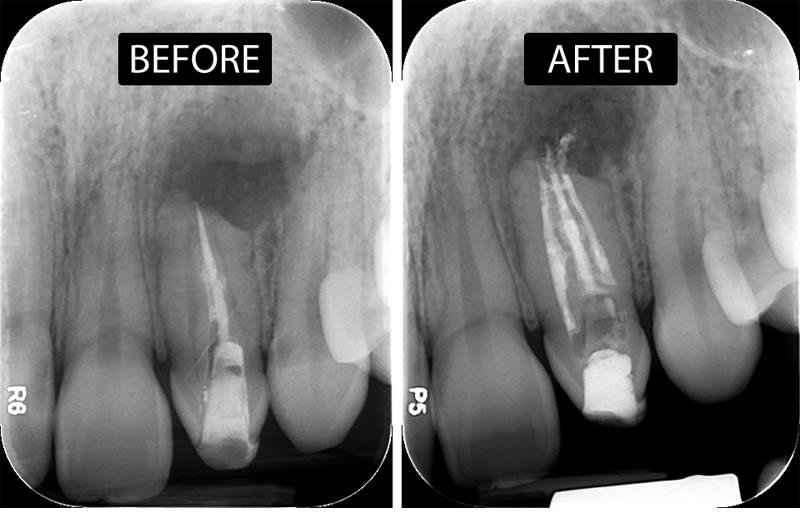
Delaying treatment can lead to the spread of infection, bone loss, and eventual tooth extraction. Root canal therapy removes the infected pulp, disinfects the canals, and seals the tooth to prevent reinfection.
Free for members
Keep reading — it's free
The rest of this article is open to DentalReach members. Create a free account, or sign in, and every article on the site opens in full.
