Reviewed topic
Endodontics
Canonical DentalReach concept representing the Endodontics knowledge domain.
Articles
Endodontics
Pulpal and Apical Diagnosis: A Clinical Guide
Evidence-based guide to history, sensibility testing, percussion, palpation, imaging and paired pulpal and apical diagnoses.
Team DentalReach
21 Aug 2024 · 181k views
Endodontics
Regenerative Endodontics Shows 98% Tooth Survival—But Is the Pulp Really Regenerating?
Regenerative endodontics showed 98% tooth survival—but pulp vitality returned in only 21%. So what are we really calling “regeneration”?
Dr.Zainab Rangwala
3 Aug 2026 · 65k views
Endodontics
Could Direct Fiber-Reinforced Composites Reduce the Need for Indirect Restorations?
Can we confidently restore endodontically treated posterior teeth directly with fiber-reinforced composites instead of immediately moving to indirect restorations?
Dr.Zainab Rangwala
1 Aug 2026 · 102k views
Endodontics
New Study Compares TheraCal PT and Biodentine for Perforation Repair
When repairing a root perforation, should sealing ability take priority over bond strength? A new study comparing TheraCal PT and Biodentine suggests the answer may not be so straightforward.
Dr.Zainab Rangwala
10 Jul 2026 · 91k views

Dental News
NDC Alert 2026: The End of Unauthorized Dental Certificate Courses?
Decoding the National Dental Commission's Latest Guidelines on Clinic Promotion, Social Media, Certificate Courses, Academies & Professional Ethics
Dr. Rockson Samuel
4 Jul 2026 · 172k views
Endodontics
COMMON MISTAKES DURING ROOT CANAL TREATMENT PROCEDURES: CAUSES, CONSEQUENCES, PREVENTION AND MANAGEMENT
Although modern endodontics has undergone substantial technological advancement, procedural errors continue to occur in routine practice. Studies have shown that many endodontic failures are associated not with the biological complexity of the disease itself but with iatrogenic errors occurring during treatment. Such mistakes can compromise canal disinfection, weaken tooth structure, damage periodontal tissues, or hinder complete obturation of the root canal system which further reduces the prognosis of the treatment. Importantly, many of these mishaps are preventable through careful planning, adherence to established treatment protocols, and an understanding of root canal anatomy.
Dr Aishwarya Arya
26 Jun 2026 · 9.2k views
Endodontics
Does Every Root Canal Tooth Need a Crown?
Not every tooth needs a crown after a root canal. Modern evidence shows that how much healthy structure remains — not the root canal itself — decides your treatment. Learn the framework dentists should be using.
GAUTAM VISHWANATH SHETTY
27 Jul 2026 · 139k views
Endodontics
Contemporary Intracanal Medicaments in Endodontics: A Clinical Guide
Various medicaments such as calcium hydroxide, chlorhexidine, antibiotic pastes, corticosteroid-antibiotic combinations, bioceramic medicaments, and strontium-based formulations have been advocated depending upon the clinical scenario. The choice of medicament depends on factors including pulpal status, microbial flora, periapical pathology, exudation, resorption, and patient-specific considerations. While calcium hydroxide remains the gold standard because of its antimicrobial and hard tissue induction properties, newer materials such as bioceramic medicaments offer enhanced biocompatibility and bioactivity. Strontium-based formulations have also gained attention for their remineralization and osteogenic potential.
Dr Aishwarya Arya
17 May 2026 · 194k views
Endodontics
Truss Access Cavities: Practical Advantage or Clinical Compromise?
Minimal access is becoming the norm in endodontics. But as we reduce cavity size, are we also limiting our ability to disinfect?
Dr.Zainab Rangwala
26 Apr 2026 · 42k views
Endodontics
Cold Sensitivity After Endodontic Treatment: Clinical Considerations
A root canal–treated tooth responding to cold is not something we expect, but it does happen. When it does, is it an endodontic failure, or are we missing something beyond the canal?
Dr.Zainab Rangwala
22 Apr 2026 · 74k views
Endodontics
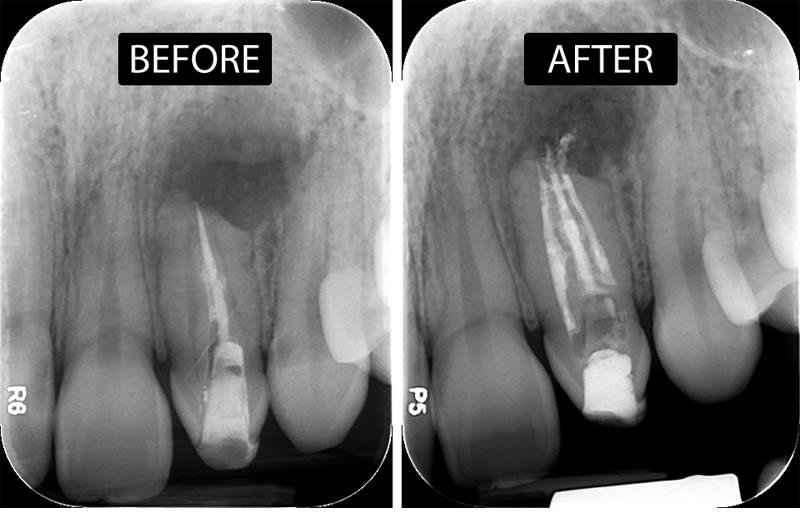
Early Warning Signs of Root Canal Treatment: A Clinical Guide to Timely Diagnosis
Learn the key warning signs that indicate you may need a root canal and why early diagnosis is essential for saving your natural tooth.
Dr. Aziz Liaquat
21 Apr 2026 · 43k views

Endodontics
Endodontic Retreatment Cases: A Comprehensive Review
Root canal retreatment cases are performed when a previously treated tooth continues to show pain, infection, swelling, or failure to heal properly. Common reasons for retreatment include missed canals, inadequate cleaning, leakage from a faulty restoration, or reinfection due to recurrent decay. During retreatment, the old filling material is removed, the canals are cleaned and disinfected again, and the tooth is sealed properly to improve long-term success. Early diagnosis and careful case selection are important for achieving a favorable outcome.
Dr Aishwarya Arya
18 Apr 2026 · 126k views
Endodontics
Endo Fever is On!
Editorial by Dr Nupur Shrirao (Volume 7, Issue 4)
Dr. Nupur Shrirao
12 Apr 2026 · 56k views

Endodontics
Management Of Weeping Canals In Endodontic Treatment
This article examines the microbial and inflammatory etiology behind weeping canals, focusing on recalcitrant biofilms and periapical pathosis.
Team DentalReach
11 Apr 2026 · 140k views
Endodontics
Retreatment Cases: Can We Predict Which Ones Will Heal?
Non-surgical retreatment outcomes are often unpredictable despite careful execution. This study evaluated AI-based models to predict healing after root canal retreatment and found that machine learning, particularly XGBoost, showed high accuracy in identifying cases at risk of failure. Key clinical factors such as preoperative lesions, tooth type, and restoration quality significantly influenced outcomes, suggesting that AI may help structure prognosis assessment before treatment begins.
Dr.Zainab Rangwala
6 Apr 2026 · 196k views
Endodontics
Beyond Radiographs: Detecting Early Endodontic Pathology with QPD
If the PDL is damaged due to an endodontic lesion, can QPD detect that change before it becomes radiographically evident?
Dr.Zainab Rangwala
27 Mar 2026 · 3.2k views
Dental Education & Research
Single vs Multiple Visit RCT: Does It Affect Post-Operative Pain?
When deciding between single- and multiple-visit root canal treatment, does post-operative pain differ?
Dr.Zainab Rangwala
24 Mar 2026 · 125k views
Endodontics
Which Rotary File Cleans the Canal Better? A Comparison of Three NiTi Systems
Does the choice of rotary file influence how clean the canal actually becomes? A comparative study evaluated three NiTi systems and found noticeable differences in cleaning efficiency.
Dr.Zainab Rangwala
7 Mar 2026 · 68k views
Endodontics
Do Orifice Barriers Really Improve Endodontic Outcomes?
Are orifice barriers truly improving long-term endodontic outcomes — or are they simply an added layer of reassurance? A new systematic review explores whether their routine placement is clinically justified, especially beyond cracked root-filled teeth.
Dr.Zainab Rangwala
17 Feb 2026 · 21k views
Endodontics
Single Visit vs Multiple Visit Root Canal Treatment
Root canal treatment can now be completed in either a single appointment or multiple visits, with both approaches showing comparable success rates when properly executed. Single Visit Approach: Modern technology has made it possible to complete cleaning, disinfecting, and filling the root canal in one session. This offers significant convenience for patients—requiring only one time off work and avoiding temporary fillings. Research confirms that single-visit treatments achieve success rates similar to multiple-visit procedures when appropriate disinfection protocols are followed. This approach works well for most routine cases, including vital teeth and those with chronic conditions. Multiple Visit Approach: The traditional method involves initial canal preparation, placement of antibacterial medication between appointments, and final filling at a subsequent visit. This extended timeframe allows for more thorough disinfection in complex cases, particularly those with severe infections or large lesions. However, it demands greater time commitment and carries risks like temporary filling failure. Clinical Decision-Making: The choice depends on individual case factors. Single visits suit most straightforward cases, while multiple appointments may benefit teeth with acute abscesses, persistent drainage, or complicated anatomy. Patient preference and practitioner expertise also play important roles. Both methods are effective when case selection is appropriate and technique is meticulous, giving practitioners flexibility to choose the best approach for each patient’s unique situation.
Pushpendra Singh
31 Mar 2026 · 199k views
Endodontics
Robots in the Access Cavity? New Study Compares Accuracy in Calcified Canals
Robotic-guided access cavity preparation demonstrates accuracy comparable to static guides and superior apical precision over dynamic navigation in managing calcified canals, according to a new in vitro study in the International Endodontic Journal.
Dr.Zainab Rangwala
28 Jan 2026 · 178k views
Endodontics
Unveiling the Invisible: The Pivotal Role of CBCT in Modern Endodontics
Introduction In conventional endodontics, diagnosis and treatment planning have long relied on two‑dimensional (2D) periapical radiographs and panoramic...
Dr Aishwarya Zammudiamanian
27 Oct 2025 · 78k views
Editorial
DentalReach Diwali Dhamaka!
Celebrating the light of information in dentistry! Editorial for Volume 6, Issue 10 As Diwali ushers in a season of light and celebration, we at DentalReach...
Dr. Nupur Shrirao
27 Oct 2025 · 14k views
Dental News
Intentional Replantation Gains Ground: A Closer Look at Prognostic Factors
When a root canal fails to resolve chronic inflammation at the apex of a tooth, what’s next? Increasingly, intentional replantation (IR) is proving to be a...
Dr.Zainab Rangwala
14 Aug 2025 · 163k views